


Case Study
How Force Fleet Built Felix, an AI-Powered Fleet Manager, on AWS with Elevata
39%
reduction in insight-response time at the 95th percentile
- Industry
- Fleet management / Telematics
- Region
- North America
- Architecture
- AI agent with MCP tools
About the Company
Force Fleet (formerly Mojio) develops connected vehicle and video telematics technology that helps small and mid-sized businesses manage their fleets. Its platform combines GPS tracking, connected dashcams, and vehicle health monitoring for home service businesses such as HVAC, plumbing, and electrical contractors, and other service businesses that depend on safe, readily available vehicles to serve their customers and get the job done.
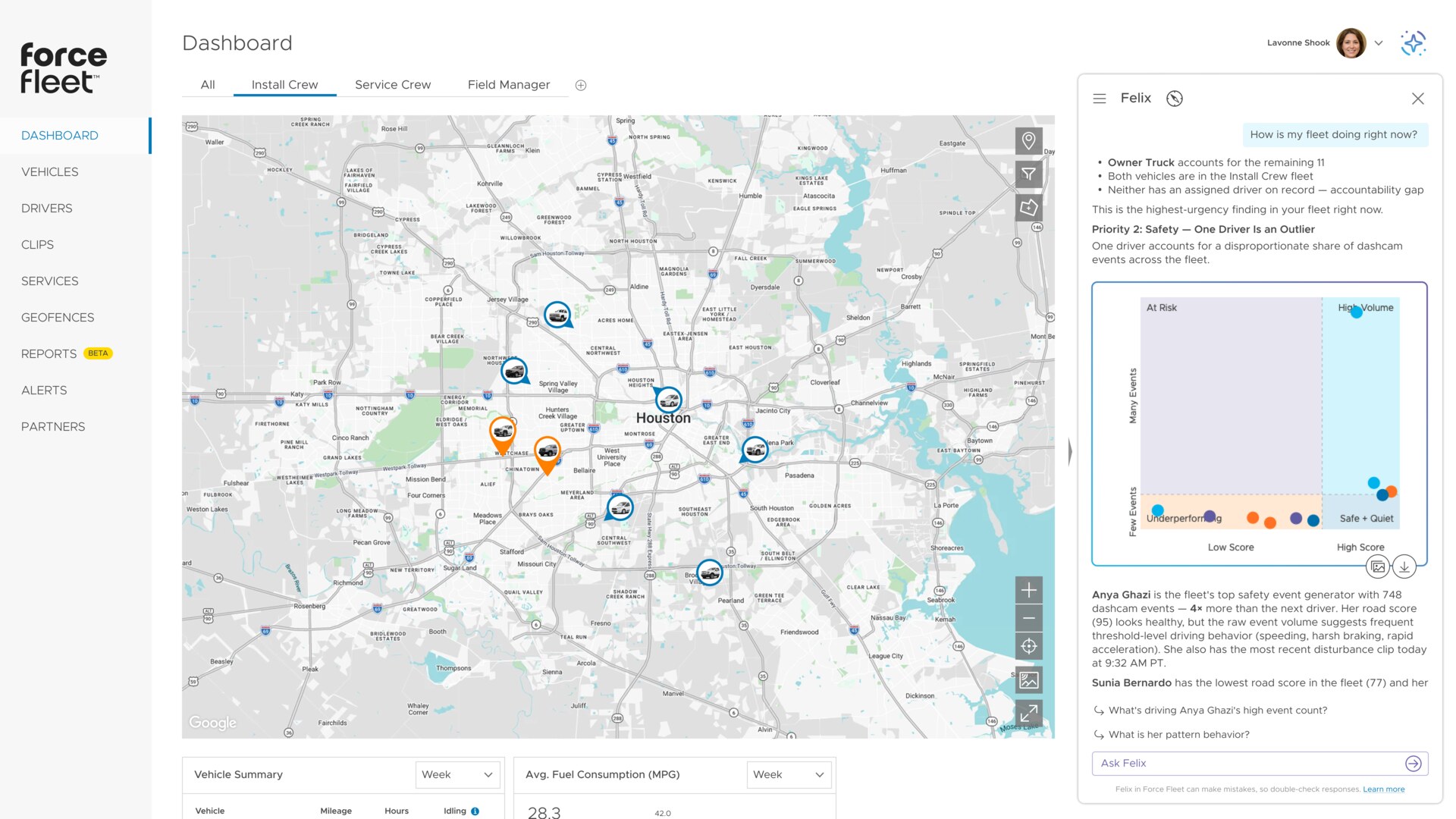
Force Fleet designed and developed Felix, an AI-powered fleet manager embedded in its fleet management platform, and engaged AWS Advanced Tier Services Partner Elevata to help bring it into production on AWS. Felix turns vehicle data into practical guidance, helping owners understand what needs attention without spending hours analyzing fleet telematics data or hiring a dedicated fleet manager.
The Challenge
Every trip generates data about driving behavior, fuel consumption, vehicle health, and fleet activity. For business owners balancing dispatch, employees, and customer commitments, the challenge is turning those signals into clear priorities.
A rise in idling might point to avoidable fuel waste. Repeated harsh braking might call for driver coaching. A diagnostic trouble code might warrant attention before a vehicle becomes unavailable. Identifying these patterns across dashboards, data exports, and reports takes time and expertise that many business owners cannot dedicate to fleet management.
Force Fleet decided to leverage the growing capabilities of AI by embedding fleet intelligence directly into the platform its customers already use. With Felix, owners can ask questions in plain language and receive guidance grounded in their fleet’s data, helping them investigate issues earlier, focus on safety risks, and make better operational decisions.
The ambition extended beyond simply explaining fleet activity and offering insights. Force Fleet envisioned Felix recommending actions, coordinating workflows, and eventually carrying out approved tasks on behalf of the owner. The company engaged Elevata to sharpen its AI roadmap and accelerate Felix’s path to production on AWS.
The Solution
Force Fleet and Elevata worked in two phases: an assessment that translated the product vision into a sequenced AI roadmap, followed by engineering and production delivery.
During the assessment, Elevata evaluated Felix using representative fleet questions, runtime data, and existing tests. The team examined whether Felix used the right fleet context, selected the appropriate tools, and produced answers that accurately reflected the underlying data. The assessment also identified the performance, safety, and operational capabilities needed for wider adoption. These findings became a prioritized engineering plan aligned with Force Fleet’s progression from explain to recommend, orchestrate, and act.
During the engineering phase, Elevata worked alongside Force Fleet’s engineering team to harden Felix, which Force Fleet built on Amazon Bedrock and Amazon Bedrock AgentCore. Embedded contextually within the web app, Felix connects conversational requests to Force Fleet’s fleet APIs and data services, and delivers insights within the user’s workflow. Code handles calculations and data preparation, while language models interpret and explain the information, keeping guidance grounded in operational data.
Elevata contributed directly to request routing, model-input optimization, parallel data retrieval, and quality evaluation. These improvements helped Felix retrieve relevant information more efficiently and reduced the wait for answers. Reference-based tests compared responses with expected answers, checking fleet context and numerical accuracy. This gave the team a repeatable way to assess changes before release.
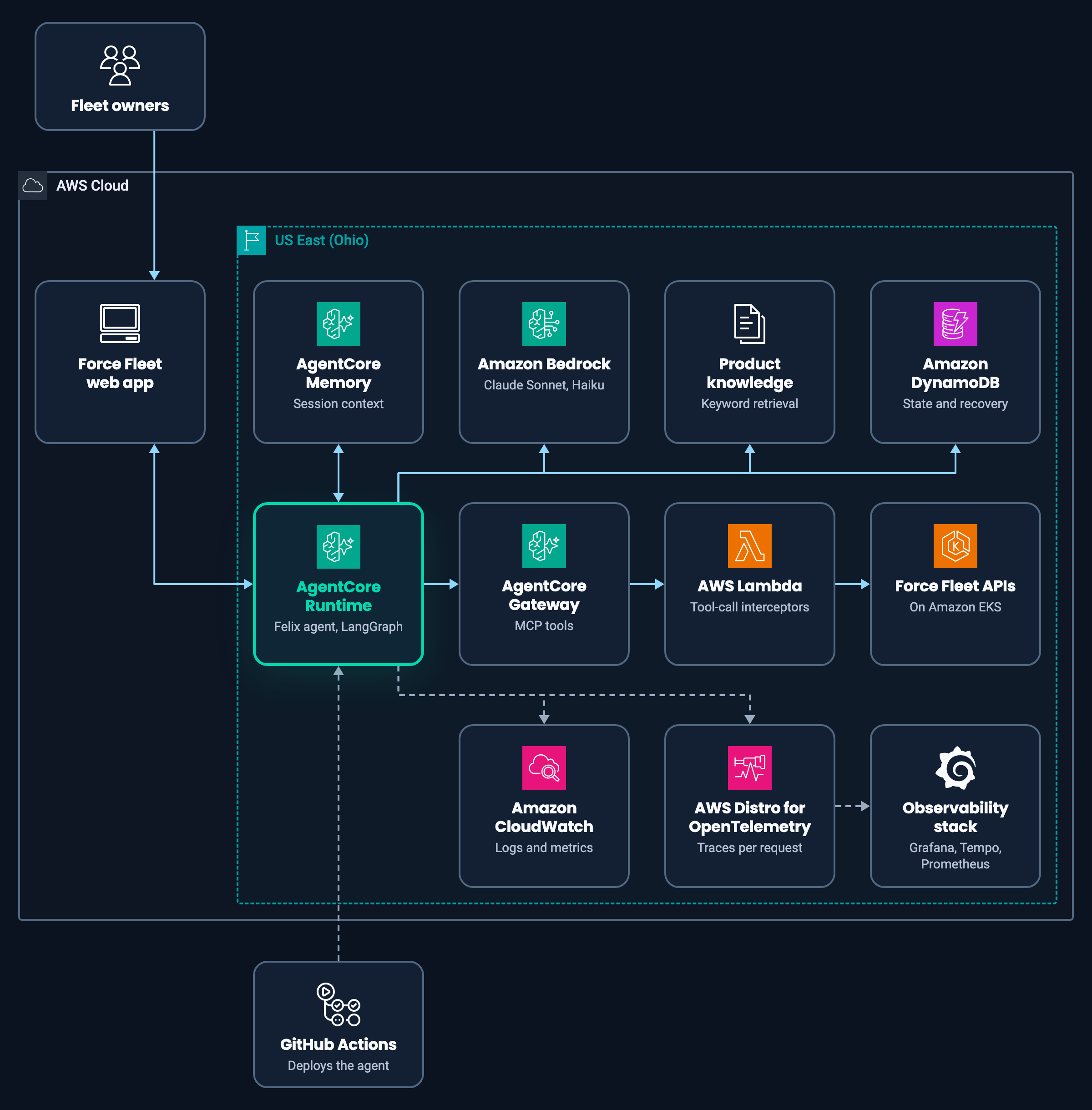
The teams also addressed how Felix responds to incomplete information and slow or unavailable dependencies. Safety policies, bounded retries, and recovery mechanisms strengthened the experience, while monitoring and alerts helped the team identify and investigate issues. Operating guides and rollout planning supported Felix’s production launch on AWS and ongoing development.
Results
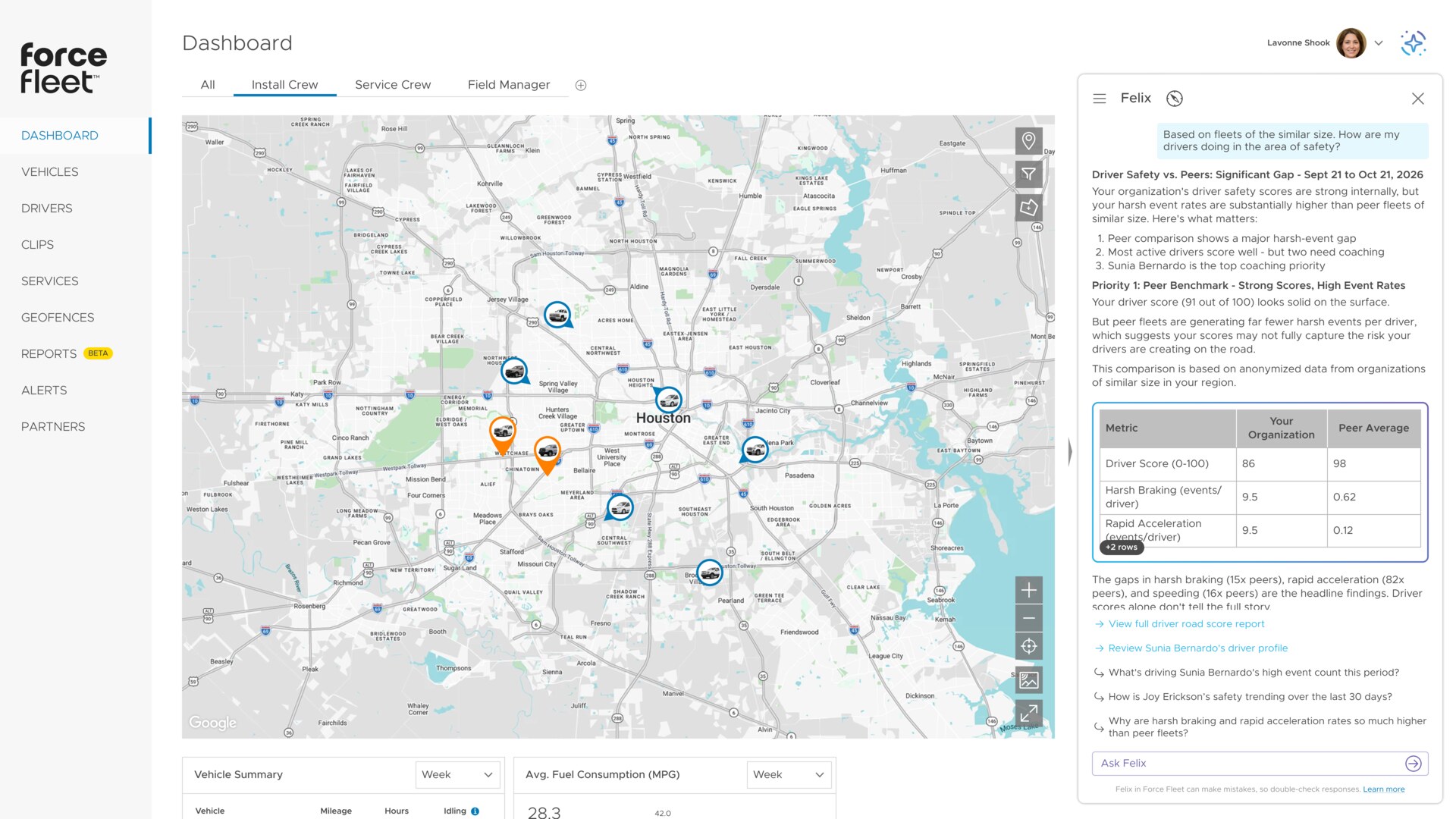
With Felix in production on AWS, Force Fleet customers now have a more direct way to use the information already available in their platform. Owners can ask about fuel-efficiency trends, driving behavior, vehicle health, and fleet activity, and see how their fleet compares with aggregate benchmarks from other Force Fleet customers, all without leaving the fleet management experience. This reduces the effort of interpreting information across screens and helps them focus on issues that deserve attention.
The experience also became more responsive. Performance testing showed a 39% reduction in insight-response time at the 95th percentile. In practical terms, the longest waits for an answer are now 39% shorter, so owners get guidance while they are still focused on the question, not after they have moved on to the next job.
For Force Fleet, Felix extends the platform’s value from visibility into vehicle activity to practical assistance with everyday fleet decisions. The engagement paired this customer experience with quality checks, safety controls, and operational visibility that support continued improvement as the product grows.
The engagement also gave Force Fleet a sequenced roadmap for its next AI capabilities. Future opportunities include richer recommendations, driver coaching, maintenance coordination, and automating approved tasks. Each step serves the same goal: help owners spend less time interpreting fleet data and managing issues, and more time running their businesses.
Learn more about Felix, the AI-powered fleet manager from Force Fleet, at forcefleet.com.
AWS services
 Amazon Bedrock
 Amazon Bedrock AgentCore
 AWS Lambda
 Amazon DynamoDB
 Amazon CloudWatch
 Amazon EKS
More case studies
View all case studies



Talk to Elevata
Let's Design Your Next Success Case
We show how to apply cloud, data, and AI with governance to create measurable business impact.
Get in touch